
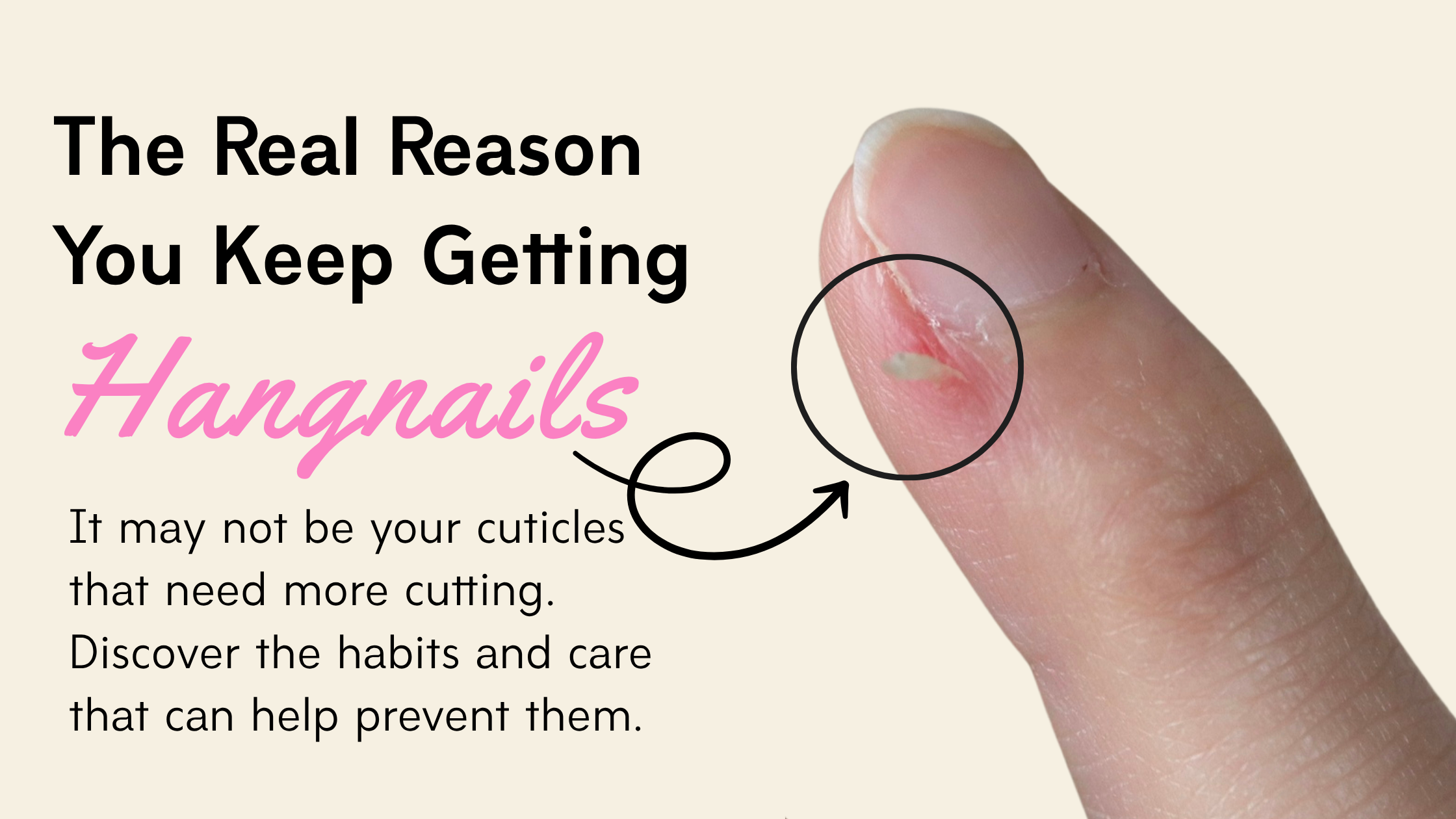
Those tiny pieces of torn skin around your nails can be surprisingly painful. Here’s what causes hangnails, what your cuticles actually need, and how professional nail care can help keep them away.
A hangnail may be small, but anyone who has caught one on clothing, hair or a bag knows just how uncomfortable it can be.
If you regularly get your nails done, you may have wondered whether frequent hangnails mean your cuticles need to be trimmed more often. The truth is a little different.
Hangnails are usually a sign that the skin around your nails has become dry, damaged or irritated. And while professional manicure care can help keep the area neat and healthy, what you do between salon appointments matters just as much.
What Is a Hangnail?
A hangnail is a small piece of torn or damaged skin that sticks out from the side of the nail.
Unlike what the name suggests, a hangnail isn't actually part of your nail. It's a piece of skin that has become dry or damaged and separated from the surrounding tissue.
Because the skin around your nails contains many nerve endings, even a tiny tear can feel surprisingly painful. Pulling or biting a hangnail can make the tear larger and may cause bleeding or irritation.
Do Hangnails Mean Your Cuticles Need to Be Cut More?
Not necessarily.
One of the biggest misconceptions about hangnails is that they happen because your cuticles are "too long" and need to be cut more frequently.
In reality, aggressively cutting or pushing back the cuticle area can irritate the surrounding skin and compromise its protective barrier. The cuticle and surrounding nail folds help protect the nail area, so professional manicure care should focus on maintaining the skin rather than simply removing as much as possible.
At Mitty, we look at the condition of the skin around your nails rather than treating every cuticle the same way. The goal is clean, polished-looking nails while keeping the surrounding skin comfortable and well cared for.
What Causes Hangnails?
Hangnails can develop for several reasons, and often it's a combination of everyday factors rather than one single cause.
1. Dry or Dehydrated Skin
When the skin around your nails lacks moisture, it can become dry, brittle and more likely to crack or tear.
Frequent handwashing and sanitising can contribute to dryness by removing some of the skin's natural oils.
If your cuticles regularly feel rough, tight or flaky, dryness may be contributing to your hangnails.
2. Picking, Biting or Pulling
That tiny piece of skin can be incredibly tempting to pick.
But pulling, biting or tearing at a hangnail can create a larger wound around the nail. The same applies to picking at dry cuticles or repeatedly scratching at rough skin.
If you notice a hangnail, resist the urge to pull it off.
3. Frequent Exposure to Water and Chemicals
Your hands go through a lot every day.
Dishwashing, cleaning, handwashing, sanitiser and other products can repeatedly expose the skin around your nails to water and chemicals. Over time, this can contribute to dryness and irritation.
Wearing protective gloves during household cleaning and keeping your hands moisturised can help reduce the impact.
4. Cold, Wind and Low Humidity
Environmental conditions can affect your skin too.
Cold weather, wind and dry air can remove moisture from the skin, leaving the area around your nails more vulnerable to cracking and tearing.
5. Extreme Temperatures
Very hot water can be harsh on dry skin, while freezing temperatures can also leave the skin around your nails dry and brittle.
If your hands are regularly exposed to temperature changes, consistent moisturising becomes even more important.
How Can You Prevent Hangnails?
Preventing hangnails isn't just about what happens during your manicure appointment.
Professional nail care and your at-home routine work together.
During a manicure, your nail technician can carefully manage the cuticle area and remove loose, dead skin without unnecessarily damaging the surrounding skin.
But once you leave the salon, maintaining that skin is up to you.
Make Cuticle Oil Part of Your Daily Routine
If there's one habit we recommend for clients who regularly experience dry cuticles and hangnails, it's consistent cuticle oil application.
Cuticle oil helps condition the skin around the nail and maintain softness and flexibility. Dermatologists also recommend moisturising dry cuticles to help prevent cracking.
Our simple recommendation: Apply cuticle oil morning and night.
It takes less than a minute, but consistency can make a noticeable difference in how your cuticles look and feel between appointments.
Why Daily Cuticle Care Matters
Regularly conditioning the skin around your nails can help:
Keep cuticles soft and hydrated
Reduce dryness and roughness
Minimise cracking and peeling
Keep the skin more flexible
Reduce the likelihood of painful hangnails
Maintain a neat, healthy-looking manicure between appointments
And remember: healthy-looking nails start with healthy-looking skin around them.
What Should You Do If You Already Have a Hangnail?
First, don't pull it.
Tearing or biting a hangnail can cause unnecessary bleeding and irritation. If it's loose and needs to be removed, it should be carefully clipped with clean, appropriate nail care equipment rather than ripped away.
If the area becomes increasingly red, swollen, painful or shows other signs of infection, it's best to seek medical advice rather than trying to manage it as a manicure concern. Nail fold infections can develop when broken skin allows bacteria to enter.
How Your Nail Technician Can Help
A professional manicure isn't only about creating beautiful nails.
A good nail technician also pays attention to the condition of the surrounding skin.
At Mitty, our approach is centred around careful, precise nail care. Rather than assuming every client needs the same amount of cuticle work, we consider the condition of your natural nails and surrounding skin during your appointment.
Professional care can help keep the nail area tidy and well maintained, while your at-home routine helps maintain those results between visits.
Think of your manicure as a partnership between your nail technician and your daily nail care routine.
The Best Hangnail Prevention Happens Between Appointments
Your salon appointment is only one part of your nail care routine.
You can have the most beautifully maintained manicure, but if the skin around your nails becomes consistently dry, exposed to harsh products or picked at between appointments, hangnails can still appear.
That's why we encourage our clients to make cuticle care a daily habit.
Hydrated skin is softer, more flexible and less likely to crack and tear.
A few seconds of cuticle oil each morning and evening can go a long way toward keeping your nails and the skin around them looking healthy between salon visits.
Ready for Healthier-Looking Nails?
If you're constantly dealing with dry cuticles, rough skin or recurring hangnails, your manicure routine may need more than another quick cuticle trim.
At Mitty Salon, we can assess your nails and surrounding skin and tailor your manicure to what they actually need.
Book your next appointment with Mitty and let our nail experts help you build a healthier nail care routine, from the salon to home.
