
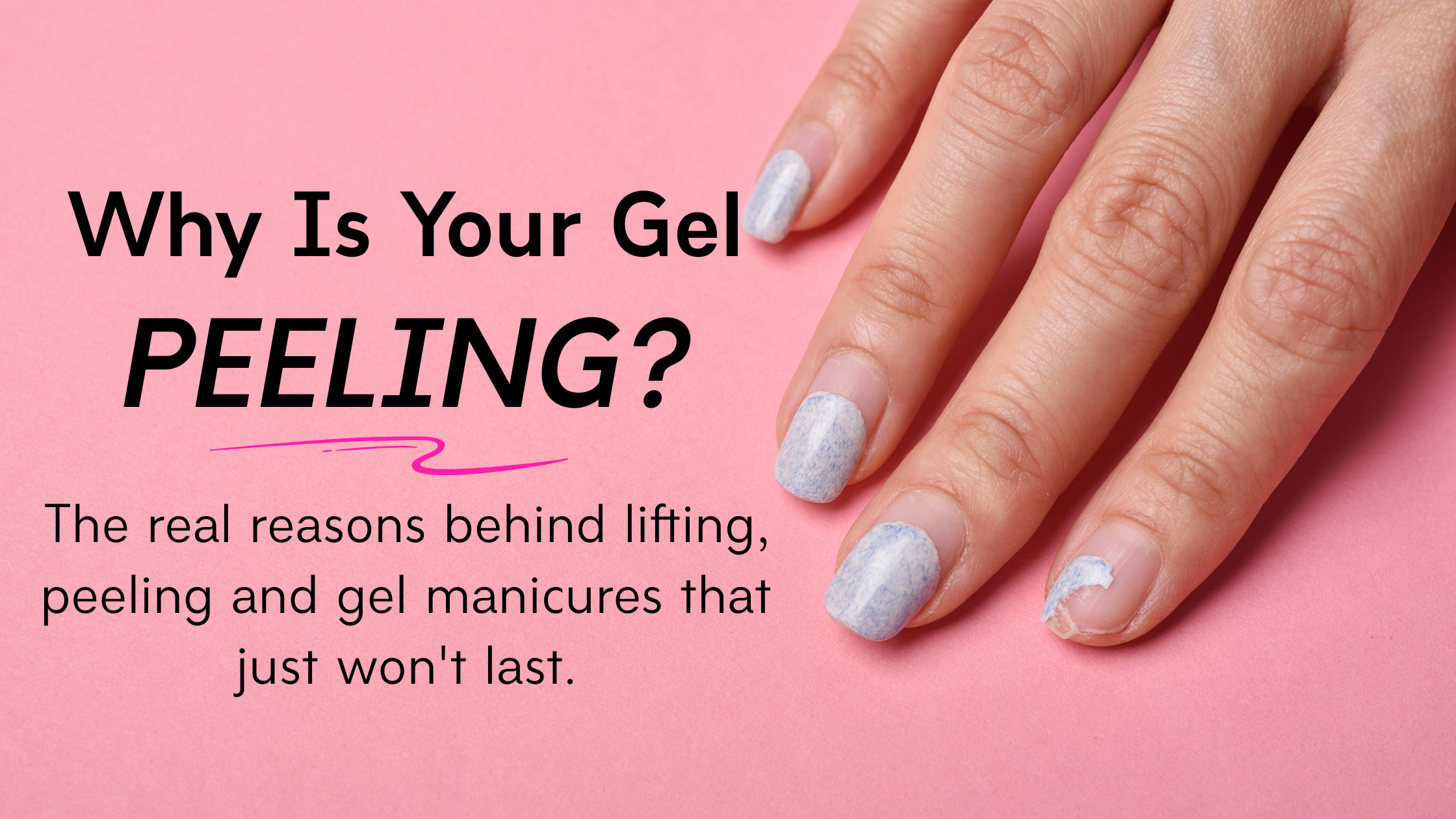
You get a fresh gel manicure and a few days later, you notice an edge starting to peel.
Why?
There's rarely one universal answer.
If you've ever asked yourself, "Why does my gel polish peel off?", the answer may involve several factors. Nail preparation, application, the condition of your natural nails and even your everyday habits can all influence how well your gel polish stays in place.
At Mitty, we know that gel nails peeling does not automatically mean there is something wrong with the product. Sometimes, the issue is more complex, and understanding what is causing the lifting is the first step towards finding a better solution.
Here are seven common reasons your gel polish may peel, chip or lift prematurely.
1. Nail Preparation Plays an Important Role
A long-lasting gel manicure starts before the first layer of product is applied.
Correct preparation helps create the right foundation for gel adhesion. This includes ensuring the natural nail is properly prepared and free from anything that could interfere with the product adhering to the nail plate.
Natural oils, moisture or residue can all affect adhesion and may contribute to gel polish lifting.
However, good preparation does not mean aggressively filing the natural nail. Over-filing can compromise the nail plate and potentially create additional challenges.
At Mitty, we believe preparation should always consider the condition of your individual nails rather than taking a one-size-fits-all approach.
2. Product on the Skin or Cuticle Can Cause Lifting
Precision matters when applying gel polish.
If gel polish comes into contact with the surrounding skin or cuticle area, it may create opportunities for lifting as your manicure experiences everyday wear.
Once an edge begins to lift, it can be tempting to pull or peel the product away. Unfortunately, this can make the problem worse and may damage the natural nail underneath.
Careful application helps create a clean and polished finish while supporting better retention.
3. Picking or Peeling Off Previous Gel Can Compromise Your Natural Nails
We understand the temptation.
You notice a lifted edge and before you know it, you're peeling away the rest of your manicure.
Unfortunately, picking or peeling off gel can remove layers from the surface of the natural nail. Over time, this may leave nails feeling thin, rough or compromised.
When your natural nails have been damaged, future applications can become more challenging.
Wee always recommend proper removal rather than picking or peeling your gel at home. Taking care during the removal process is just as important as the application itself.
4. Frequent Exposure to Water and Chemicals Can Contribute to Wear
Your hands go through a lot every day.
Frequent or prolonged exposure to water, cleaning products and other chemicals can contribute to the everyday wear of your manicure.
While gel polish is designed to withstand normal daily activities, repeated exposure can place additional stress on both the product and your natural nails.
We recommend wearing gloves when washing dishes or using cleaning products to help protect both your manicure and your hands.
Good aftercare is not about avoiding everyday life. It's about giving your manicure the best possible chance of lasting well.
5. Using Your Nails as Tools Can Cause Chips and Peeling
Your nails may look strong, but they aren't designed to replace actual tools.
Opening cans, scraping labels, picking at surfaces or using your nails to pry things open can place pressure on the edges of your manicure.
Over time, this can contribute to chipping, cracking or gel manicure peeling, particularly around the free edge of the nail.
If you notice that certain nails consistently chip or lift before others, your everyday habits could be playing a role.
Small changes in how you use your hands can make a noticeable difference to how your manicure wears.
6. The Condition of Your Natural Nails Matters
Not all natural nails behave in the same way.
Some nails are naturally more flexible, while others may be dry, peeling, thin or prone to breaking. Previous damage can also affect the condition of the nail plate.
These differences can influence how well a gel product performs.
For example, a highly flexible natural nail moves throughout the day. Depending on the condition of the nail and the type of product being used, this movement may contribute to lifting or premature wear.
This is why there isn't always one simple answer to the question, "Why won't gel polish stay on my nails?"
At Mitty, we look at the condition of your natural nails as part of the bigger picture rather than assuming every set of nails needs the same service.
7. Your Current Nail Service May Not Be the Right Fit
This is one of the most important factors to consider.
A standard Gel Manicure may work beautifully for one person, while someone else may need additional structure or support depending on their natural nails and lifestyle.
If you're regularly experiencing gel nails peeling or lifting, continuing to apply the same service without understanding the cause may not solve the underlying problem.
When we assess your nails at Mitty Salon, we may consider factors such as:
The condition and flexibility of your natural nails
Previous nail damage
Your preferred nail length and shape
Your work and daily activities
How frequently your hands are exposed to water or chemicals
How you use your hands throughout the day
Your maintenance routine
Sometimes, the solution isn't simply finding a product that stays on longer. It may mean choosing a service that provides the appropriate level of structure and support for your individual nails.
How Long Should Gel Nails Last?
Another common question we hear is, "How long should gel nails last?"
There is no single answer for everyone.
A professionally applied gel manicure is designed to provide lasting wear, but how long it lasts can vary depending on your natural nails, nail growth, lifestyle, daily habits and aftercare.
If your manicure consistently begins peeling or lifting after only a few days, specially when it happens repeatedly, it's worth looking more closely at why.
Rather than simply reapplying the same product, we believe it's important to understand what may be causing the issue.
The Mitty Approach: Understanding Why
At Mitty, our approach isn't simply to ask:
"How do we make this product stay on?"
We also ask:
"Why isn't it staying on?"
Repeated lifting can be a sign that something needs closer attention.
By considering your natural nail condition, lifestyle, previous damage, nail length, shape and maintenance habits, we can better understand what may be affecting your gel retention.
For some of our clients, a standard Gel Manicure may be the perfect fit. For others, additional structure or a different approach may be more suitable.
We don't believe every set of nails should be treated exactly the same.
Better Retention Starts With Looking at the Bigger Picture
There is rarely one magic solution to preventing gel polish from peeling.
Better retention comes from looking at the full picture:
Prep + Product + Application + Aftercare = Better Retention
Each element plays a role in how your manicure performs.
When we understand what may be contributing to the lifting or peeling, we are in a much better position to recommend an approach that works for your nails.
Experiencing Repeated Gel Polish Peeling?
Your manicure shouldn't be a constant cycle of peeling and repairing.
If you're experiencing repeated problems with gel polish lifting or peeling, visit us at Mitty Salon. We can assess what's happening, consider your natural nail condition and help recommend the most appropriate service for your nails and lifestyle.
Book your next appointment with us and let's find the right approach for your nails.
